Essays
John C. Adams
Technology Arc of The Third Phase
Technology solves so many problems, alleviates so much hardship. Innovation is what drives productivity, and productivity is what drives growth and prosperity.
Technology solves so many problems, alleviates so much hardship. Innovation is what drives productivity, and productivity is what drives growth and prosperity. One need look no further than the correlation between the industrial revolution and per capita GDP to see that Carnegie’s poetically clever observation, that capitalism is what turns luxuries into necessities, is axiomatically true.
We have reached an inflection point in the information age with the advent of AI. Its impact on efficiency and productivity I suspect will soon be beyond doubt. My personal opinion is that we actually still underestimate its impact. While there will undoubtedly be dislocation in labor markets in the near and probably even medium terms, the overall impact will be an enormous net positive. If we measure economics in time-prices, as Marian Tupy and Gale Pooley have taught us to do, we know that nearly everything on earth has become far more plentiful, lower cost and higher quality over both the short and the long term. And the time-price impact on lower socioeconomic levels has been greater than higher ones, so fairness improves. Productivity may be even more important than deregulation in addressing the affordability crisis.
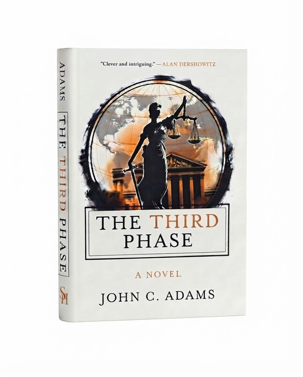
In The Third Phase, the central protagonist, once he has learned history and economics, predicts a world with “a billion billionaires in it.” As he makes these predictions, he implores his voters to imagine describing Amazon.com to a cave man – seemingly beyond hyperbolic. In the book, his key mentor and tutor predicts that the world will achieve his goal in 729 years (students of Plato’s Republic know that this magic number is a shout out to Socrates), but the author believes it will be sooner.
I don’t want to be dismissive of the risks of AI. It strikes me that one of the reasons no aliens have visited us is that they all get to the point of developing AI and then, poof, disappear. But we will undoubtedly choose to harness it and, if we avoid cataclysm, it will serve us in ways we can scarcely dream today
So, what does all this mean for education. The Third Phase points out that societies’ education systems tend to follow the economic system – we went from an agrarian economy where people were taught in one-room school houses (often for just a few years) to our current industrial age education factories (a.k.a. our schools). The improved effectiveness of the education factory over the agrarian one room model is obvious – but that should point us to the vastly improved effectiveness we will reap when we (finally) drag our education system, likely kicking and screaming, into the information age.
The topic of education calls forth a political minefield for any who dare to even broach the topic and I will duck that (at least until a later paragraph). We now have the opportunity for truly custom-tailored learning. The maddening inefficiency of having our students whipsawed between being bored to tears covering material they already know or lost and confused in that soul-crushing state of being left behind (but passed anyway), is the root problem of our education factories. We are batch processing in what should be a “job shop”. The information age can fix that – and one day soon we will have the political will to let it.
So, yes, one cannot deny that technology has improved the human condition in ways that all but true students of history barely realize, but has it improved the human soul? My answer to that is – not yet. What on earth do I mean by – yet? Socrates said that the key to improving the human soul is education. We can’t improve morally without wisdom – without the fusion of knowledge and love. Can technology do that – or at least help with that? Here is where that little word “yet” becomes important.
Alfred North Whitehead said that the history of philosophy consists of a series of footnotes to Plato. This author agrees, and The Third Phase spells that out in myriad ways. The millennia-long battle between Platonism and Nihilism has reached a fevered pitch. Are values objectively real or not? That, Hamlet fans, is the question. Anyone who has read this far would no doubt call me an optimist. It is neither a surprise nor a secret that The Third Phase leans toward being a best-case thought experiment as it is designed to create a modern version of Plato’s “Ideal State”. My optimism about the impact of technology on the human soul stems from this, let’s call it, educated guess – when one has a teacher, programmed for your exact needs, tapping into the entire history of human thought to get you the data you need – in that world – Plato will win.
The Third Phase postulates that there are flaws, deeply rooted perverse incentives in our current political system that have resulted in ravenous political parties working hand in hand with a nearly diabolical lobbying industrial complex to conjure up horrendous economic inefficiency, waste, abuse, war and strife. We have poorly informed voters (who lack incentive to learn the issues) electing characters right out of central casting for Socrates’ famous Ship of State analogy. Yet, as Churchill points out, it is the worst system, with the exception of all the others.
Churchill’s biting wit always imprints memorable truths on its consumers, but The Third Phase asks the question – in one scene to an AI version of Churchill himself – is that still true? Could our now mind-blowing information technology turn that on its head? Are we at a point where voters have such access to information that we can take democracy to a new level and defang the ravenous wolves running the show heretofore? The Third Phase is a glimpse of what that world could look like, and the type of people who could create that world. People who don’t just see beautiful things, but, as Socrates begs us to do, people who see beauty itself.